
Auto Transport Service
Enclosed Car Transport for Cars You Do Not Want on an Open Deck
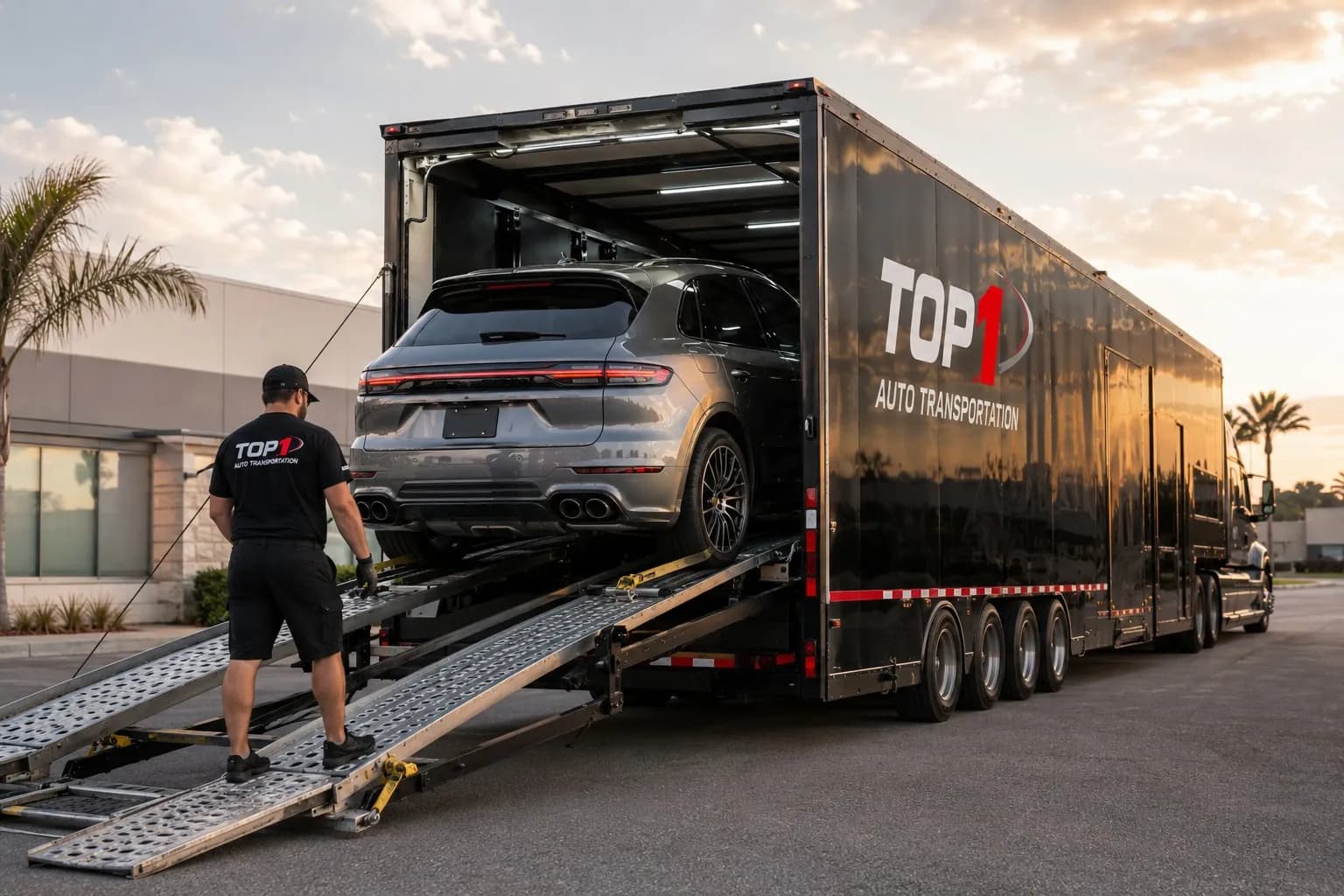
Enclosed auto transport places your vehicle inside a covered trailer so weather, road grit, and casual eyes stay off the paint. It costs more than open shipping and makes sense when the car’s value or finish needs that extra layer.
Enclosed car transport is not an upsell for every sedan. It is the right call when a chip, dust storm, or soft-top soak would actually bother you. Soft-sided and hard-sided trailers both cover the car; hard-sided units add more structure and usually cost more.
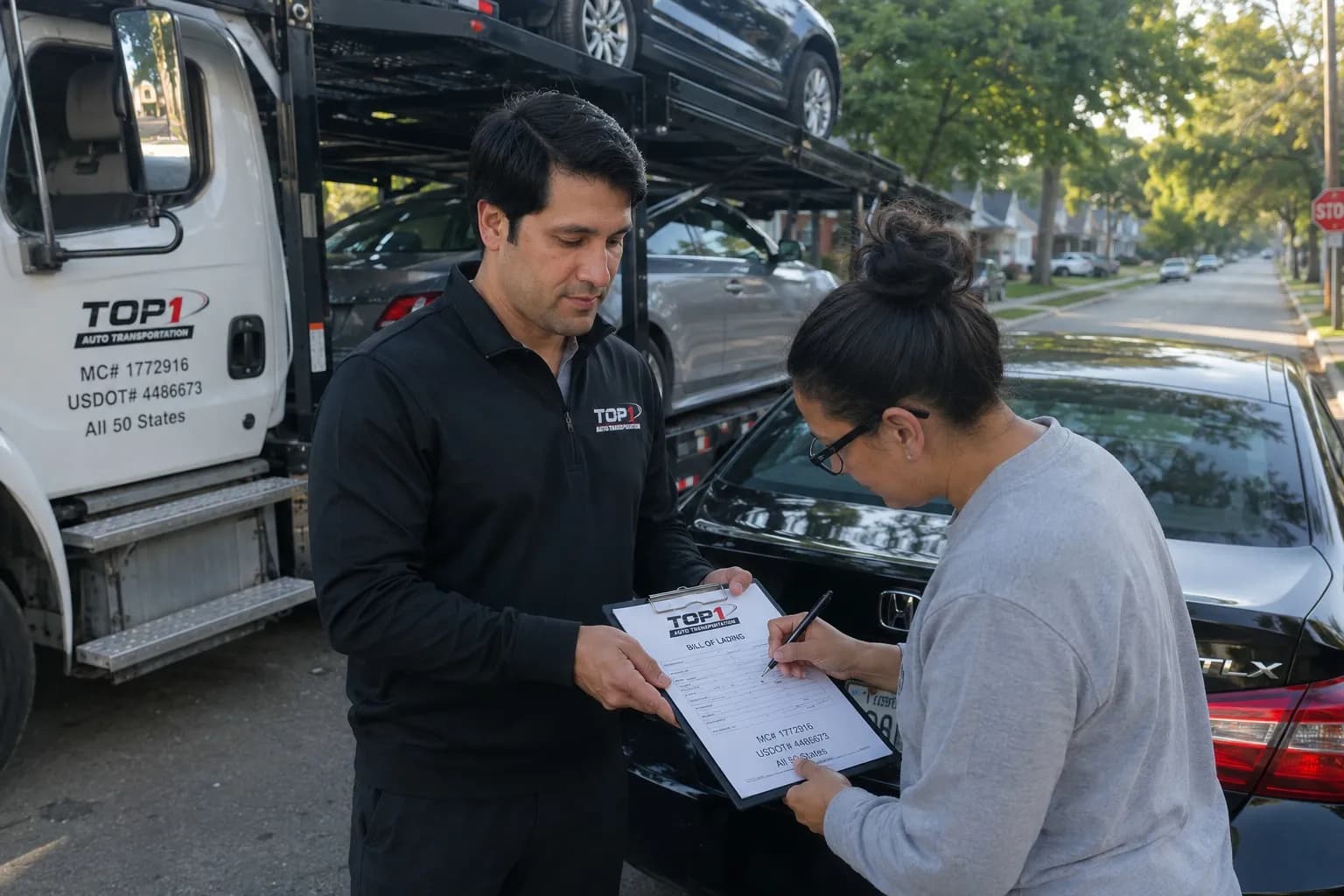
Top1 matches enclosed loads with carriers who regularly move luxury, classic, and exotic cars. You still get a bill of lading inspection, door-to-door service when access allows, and no upfront payment before carrier assignment.
Why shippers pick Enclosed Car Transport with Top1
- Covered trailer protection from rain, hail, and highway debris
- Better fit for luxury, classic, exotic, and show cars
- Carriers used to low ground clearance and careful loading
- Quieter, more private transit than an open deck
- Documented condition checks at pickup and delivery
- Honest open vs enclosed quotes so you can compare the real premium
When enclosed shipping is worth the extra money
Pay for enclosed when the car is a classic or exotic, a luxury daily with soft paint or carbon trim, a convertible you cannot risk in weather, or a fresh restoration. Also use it for cars heading to auction or a buyer who will inspect every panel.
Skip enclosed for a high-mileage commuter if the goal is simply getting it there. Open car transport handles that job for less and usually finds a truck faster.
Soft-sided vs hard-sided enclosed transport
Soft-sided enclosed trailers use a covered frame and still keep weather and debris off the vehicle. Hard-sided trailers use rigid walls and often feel more secure for seven-figure or ultra-rare cars.
Ask which type your quote assumes. Availability changes by lane. On some routes soft-sided is what runs weekly; on others a hard-sided unit is easy to book. We tell you what the assigned carrier actually uses.
How the enclosed booking process works
Share year, make, model, modifications, ground clearance notes, and whether the car runs. Low kits, wide tires, and non-running cars change equipment needs. We find a carrier with the right ramp or lift approach, then lock a pickup window.
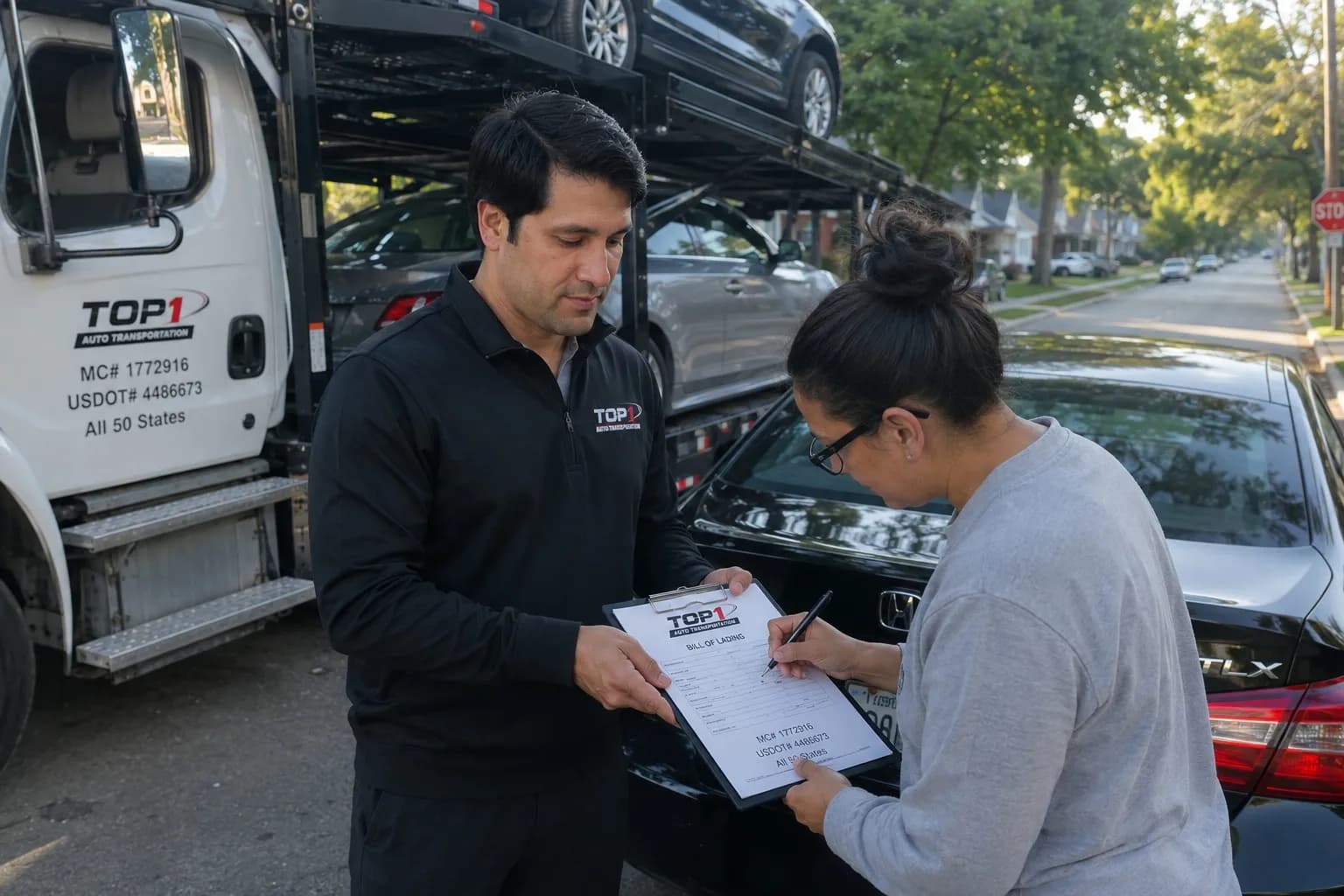
At pickup, walk every panel with the driver. Photograph the car yourself as well. Enclosed does not remove the need for paperwork — it only changes the trailer around the car.
What drives enclosed auto transport cost
- Fewer enclosed trucks on the road than open carriers
- Vehicle length, height, and whether it needs a single-car trailer
- Soft-sided vs hard-sided equipment
- Running condition and loading difficulty
- Peak seasons when collectors and dealers move inventory
Expect roughly 30–40% more than open on many routes, sometimes higher for single-car white-glove units. Your ZIP-to-ZIP quote beats any national average.
How to prepare a high-value car for enclosed shipping
Wash it. Remove toll tags and loose accessories. Disable alarms that scream on a moving trailer. Leave a quarter tank of fuel. Tell us about aftermarket aero, lowered suspension, or a dead battery before dispatch — surprises at the curb waste everyone’s day and can cancel a pickup.
If the street cannot hold a large trailer, plan a nearby lot meetup. That is normal, not a failure of door-to-door service.
Frequently asked questions
Is enclosed car shipping worth it?
How much more does enclosed cost than open?
Can enclosed carriers handle lowered cars?
Does enclosed transport include insurance?
Is enclosed always door to door?
Shipping a high-value car? Ask for enclosed and open side by side so you see the real premium.
Get a Free Car Shipping QuoteNo upfront payment. Licensed FMCSA carriers. All 50 states.